In-Depth Guide to Batwing Optical Lenses for LED Panel Lights: Principles, Benefits & Applications
What Is a Batwing Optical Lens for LED Panel Lights?
A Batwing optical lens is a secondary optical component specifically designed for direct-lit LED panel lights. By utilizing a unique batwing light distribution, it optimizes light output, overcomes the limitations of conventional optics, and delivers superior illumination performance.
Traditional panel light optical systems often suffer from narrow beam angles, concentrated center brightness, and insufficient edge illumination. This results in uneven lighting, visible dark areas, and increased glare. In addition, achieving uniform illumination typically requires a greater mixing distance, making ultra-thin luminaire designs more difficult while increasing manufacturing and transportation costs.
Batwing optics were developed to address these challenges by improving light distribution while enabling thinner, more efficient lighting fixtures.
How Does Batwing Optics Work?
The core principle of a batwing optical lens lies in its freeform optical surface, which precisely redistributes light into a wide, uniform pattern rather than allowing it to concentrate directly beneath the LED.
The optimization process typically includes three key stages:
1. Optical Simulation
Professional optical simulation software analyzes the LED's light characteristics. Engineers continuously optimize the lens profile to achieve the desired beam angle and light distribution.
2. Wide-Angle Light Redistribution
Instead of directing most light along the central axis, the lens refracts light outward toward both sides, expanding the beam angle to approximately 170° and significantly reducing central hotspots.
3. Uniform Illumination Optimization
The freeform microstructure precisely controls the exit angle of light across different regions of the lens, increasing edge illuminance, minimizing brightness differences between the center and edges, eliminating dark zones, and reducing glare.
Advantages and Challenges of Batwing Optical Design
Compared with conventional narrow-beam optical solutions, batwing optics offer significant advantages while demanding much higher engineering precision.
Key Advantages
Superior Light Uniformity
The wide batwing light distribution greatly improves edge illumination, eliminates dark areas, and produces a highly uniform lighting effect across the entire panel.
Improved Visual Comfort
By reducing excessive center brightness, batwing optics effectively minimize glare and visual fatigue, making them ideal for healthy lighting environments.
Enables Ultra-Thin Panel Light Design
Excellent batwing optics reduce the required light mixing distance, allowing manufacturers to achieve uniform illumination without relying on thick diffusers or light guide plates. This supports panel light thicknesses as low as 20–30 mm, while reducing material consumption and manufacturing costs.
Technical Challenges
Batwing optical lenses require exceptional precision in:
- Optical design
- Freeform surface engineering
- Mold manufacturing
- Injection molding consistency
Without sufficient expertise, manufacturers may encounter reduced optical efficiency, poor uniformity, or inconsistent mass production quality.
Typical Applications
Education Lighting
Ideal for classrooms and educational facilities where high uniformity and low glare are essential for eye comfort. Ultra-thin fixtures also simplify renovation projects and reduce installation costs.
Commercial Office Lighting
Creates comfortable, evenly illuminated workspaces for offices, conference rooms, and commercial buildings while complementing modern minimalist interior designs.
Ultra-Thin Panel Lights for Export Markets
Global demand for lightweight, slim lighting fixtures continues to grow. Batwing optics enable 20–30 mm ultra-thin panel lights, reducing packaging volume, transportation costs, and overall production expenses.
From Optical Design to Mass Production
Transforming advanced optical theory into reliable products requires both engineering expertise and manufacturing capability.
Runlian Optics has specialized in the research, design, and manufacturing of LED secondary optical lenses for over a decade. Our panel light lenses represent the successful implementation of advanced batwing optical technology.
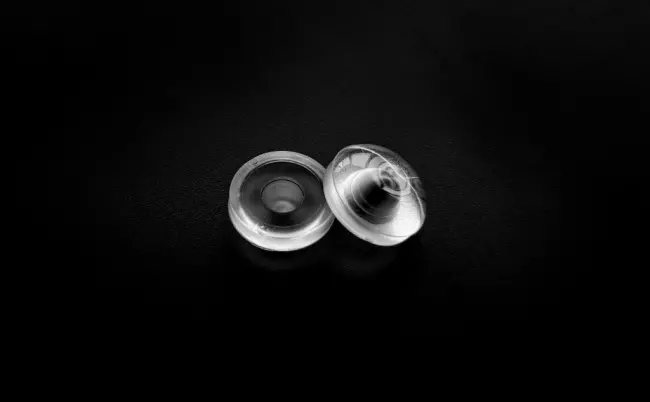
Our batwing panel light lenses feature:
- 170–180° ultra-wide batwing light distribution
- Optimized freeform optical microstructures
- More than 30% improvement in light spreading performance
- ≥90% lighting uniformity
- Enhanced edge illumination with minimized dark areas
- Reduced glare for greater visual comfort
- Compatibility with mainstream SMD LED packages
- Light mixing distance as low as 20–30 mm
- Support for ultra-thin direct-lit panel light designs
- Lower consumption of aluminum, diffusers, and other materials
- Potential to reduce overall fixture manufacturing costs by over 50%
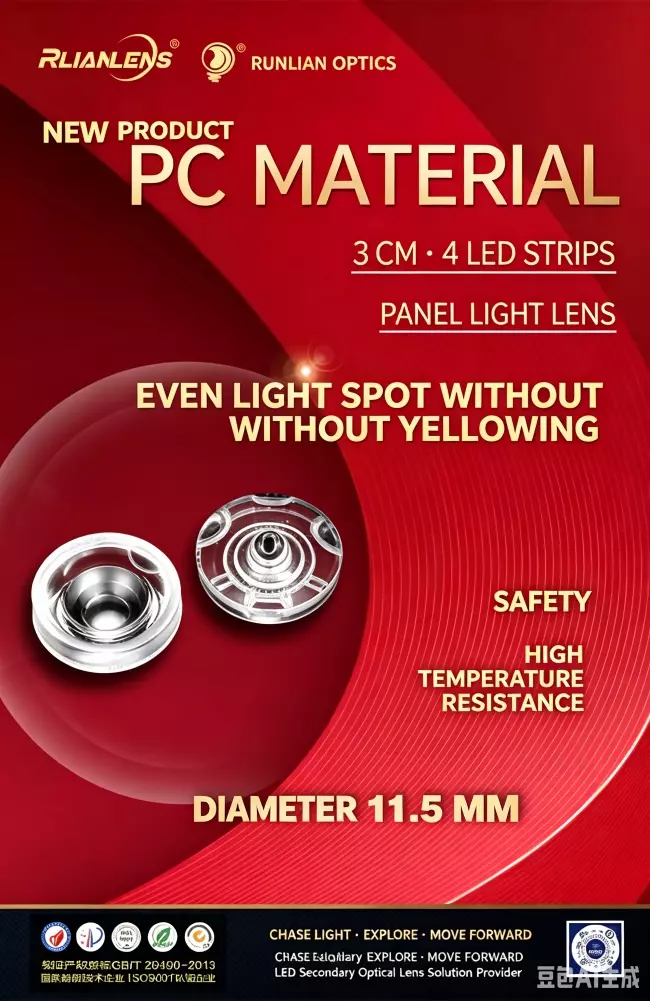
Backed by integrated optical design, precision mold manufacturing, injection molding, and advanced optical testing, Runlian Optics ensures stable mass-production quality while providing customized optical solutions tailored to each customer's lighting requirements.
Looking Ahead
As healthy lighting standards continue to evolve and demand for ultra-thin luminaires grows worldwide, batwing optical technology will play an increasingly important role in indoor lighting.
Future innovations will focus on even greater optical precision, higher lighting uniformity, improved energy efficiency, and lower manufacturing costs—driving the next generation of LED lighting solutions.
Previous: LED lens material performance comparison and selection guide
Next: Why Choose PC Optical Lenses for LED Panel Lights? 6 Key Advantages
